Background
Similar to Levelet, this project was also done alongside the Google UX Design course. I was prompted by the course to consider a design project that focuses on social good. I identify as a queer person of colour, and my experiences with this identity have always been a strong motivator for me to address concerns within the LGBTQIA+ community.
Since moving back to Toronto, I have sought out different ways to connect with other queer folks in the city, but was met with challenges at times. This includes not knowing where to find events, not being able to find the right type of events I’m looking for, and generally feeling disconnected from the queer community.
Queerio is a design project that blossomed from these experiences and aims to ultimately address the question of:
Research goals
I conducted interviews to empathize with potential users. To guide my interview questions, I outlined the following research goals:
- 1Understand what people’s needs and frustrations are when looking for ways to connect with the queer community.
- 2Identify common emotions and processes people experience when trying to search for community events.
- 3Understand how connected or disconnected people feel to the local queer community, to their queer identities, and how it impacts their sense of belonging in the city.
Interview questions
- 1What is your current involvement with the local queer community in Toronto? How active are you with participating in events or being in any organizations?
- 2How connected do you feel to the queer community? Has anything encouraged or discouraged a sense of belonging with the community?
- 3How do you learn about local events to attend? Are there any challenges you face when searching for activities or communities to connect with?
- 4Please tell me more about the specific communities within the larger queer community that you would be interested in connecting with. How do you feel about the resources that are currently available for you to connect with them?
- 5What sort of events, activities, or organizations would you want to connect with?
Participants
My target users for this project were anyone over the age of 18 who identifies as LGBTQIA+ and lives in Toronto. I used convenience sampling as this was done alongside my coursework, and recruited two friends who meet this criteria.
Empathy mapping
- –“I feel pretty disconnected from the Toronto queer scene at times.”
- –“My sense of belonging to the community is still missing something — it can be hard to maintain relationships with people you meet at one-off events, as opposed to ongoing, consistent get-togethers.”
- –“It’s exciting for sure, but hard to keep track of. Even if I follow all the accounts, I can lose track of which events are happening when, and what new clubs are popping up.”
- –“It would be nice to just meet more people who have the same identities as me.”
- –“Toronto is pretty diverse, but I like when spaces are explicitly reserved for people of colour sometimes.”
- –“I do look at different clubs’ profiles and photos to get a sense of who comes out to the events — I’m not sure if I’ll fit in if everyone is older, or if it’s like all men for example.”
- –Despite Toronto having a queer scene, physical proximity to certain areas like the Gay Village can affect a sense of belonging and connectedness to the community
- –Wants more niche queer spaces (i.e., subgroups for community)
- –Wants to know if they will share similarities with the people at certain queer events before going so that they don’t feel alienated
- –Having a variety of events with different energy levels — active vs low-energy crafts — would be nice
- –Found events from Instagram
- –Heard about events from friends
- –Has trouble searching for the right type of event on Instagram
- –Stays active — enjoys events and activities with physical activity involved
- –The amount of queer clubs on Instagram can feel overwhelming
- –Seeing so many events is also exciting
- –Frustrated with finding spaces that cater towards their specific identities (as a woman, being bisexual, being a POC)
- –“I feel like there isn’t a curated list of specifically queer events, or maybe I’m just not looking hard enough, and figuring out where everything is can be hard too.”
- –“It’s just whatever pops up on my social media.”
- –“I feel like it would feel nicer and more welcoming if there was like a queer workout space.”
- –Queer events can be intimidating to go to alone
- –Hasn’t found a good way to know what is happening in the area
- –Being surrounded by queer people generally feels safer and puts them at ease, but it can also feel toxic in the wrong community of people
- –Would like to connect more with WLW groups
- –Would like events that involve physical activities or art/creative activities
- –Low involvement with the queer community — usually only attends Pride events or activities that friends invite them to
- –Doesn’t actively seek out events to go to
- –Word-of-mouth or Instagram posts that pop up are typically how they become aware of events
- –Not super connected to the community in Toronto
- –Frustrated when an interesting event says it’s in Toronto but is further away within the Greater Toronto Area and not near her
User persona
- –New to Toronto — has lived in the city for 3 months, near Sugar Beach Harbourfront
- –Works as a barista at a nearby coffee shop
- –Familiar with tech and social media; uses Instagram a lot
- –Likes to go bouldering with her partner, who she moved to Toronto with
- –Has attended 5 queer events in town, including a queer run club and queer climbing club
Problem statement for design
Low-fi wireframes
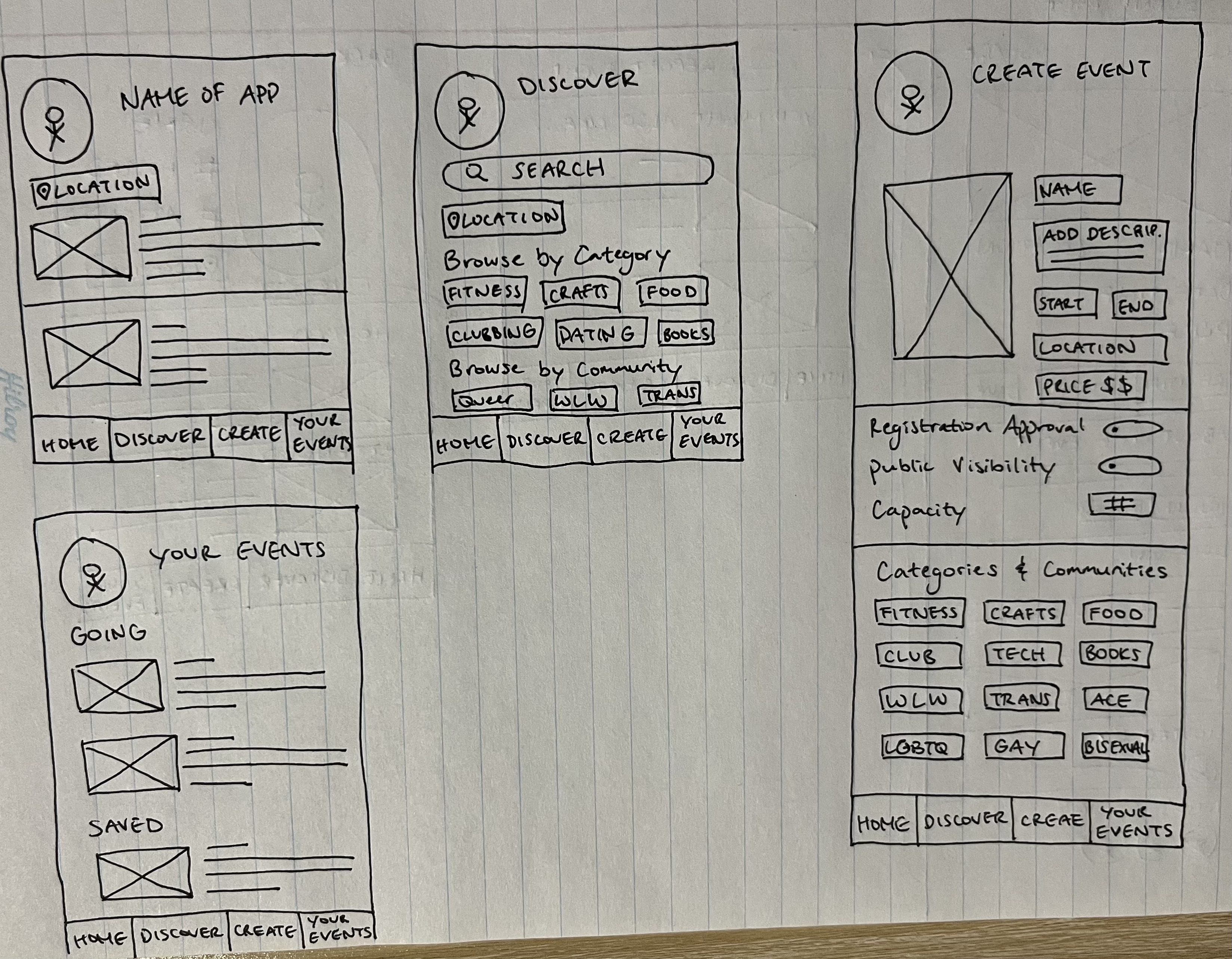
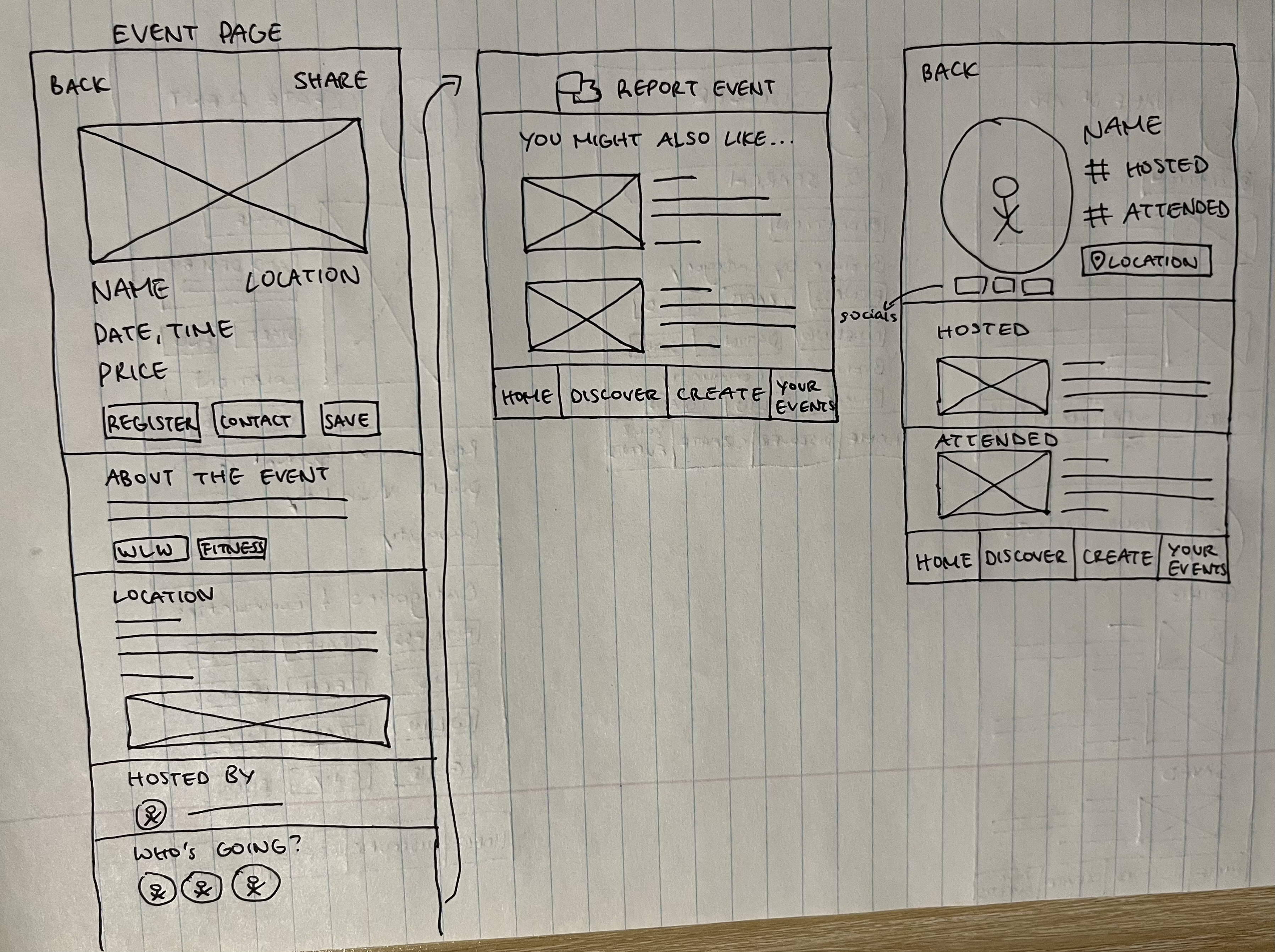
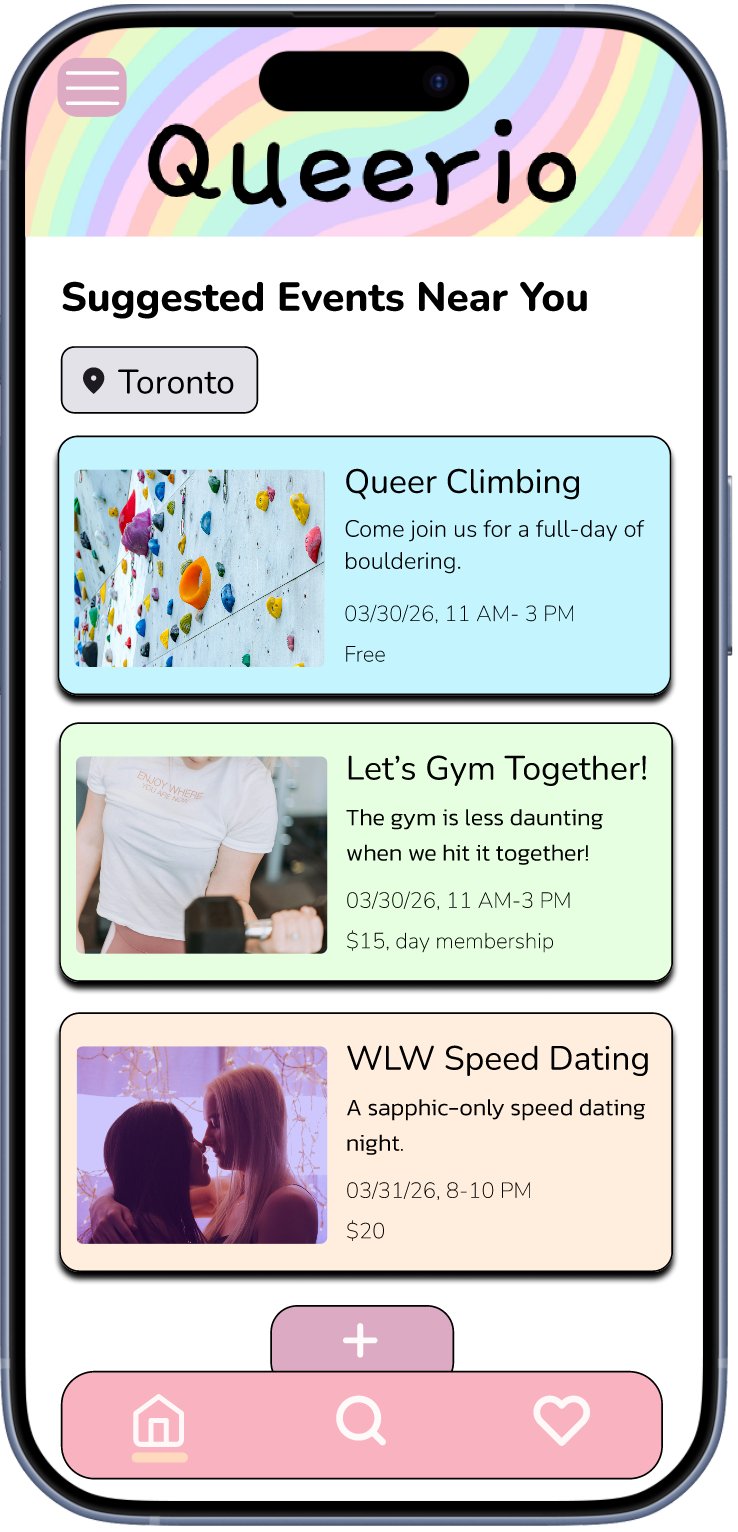
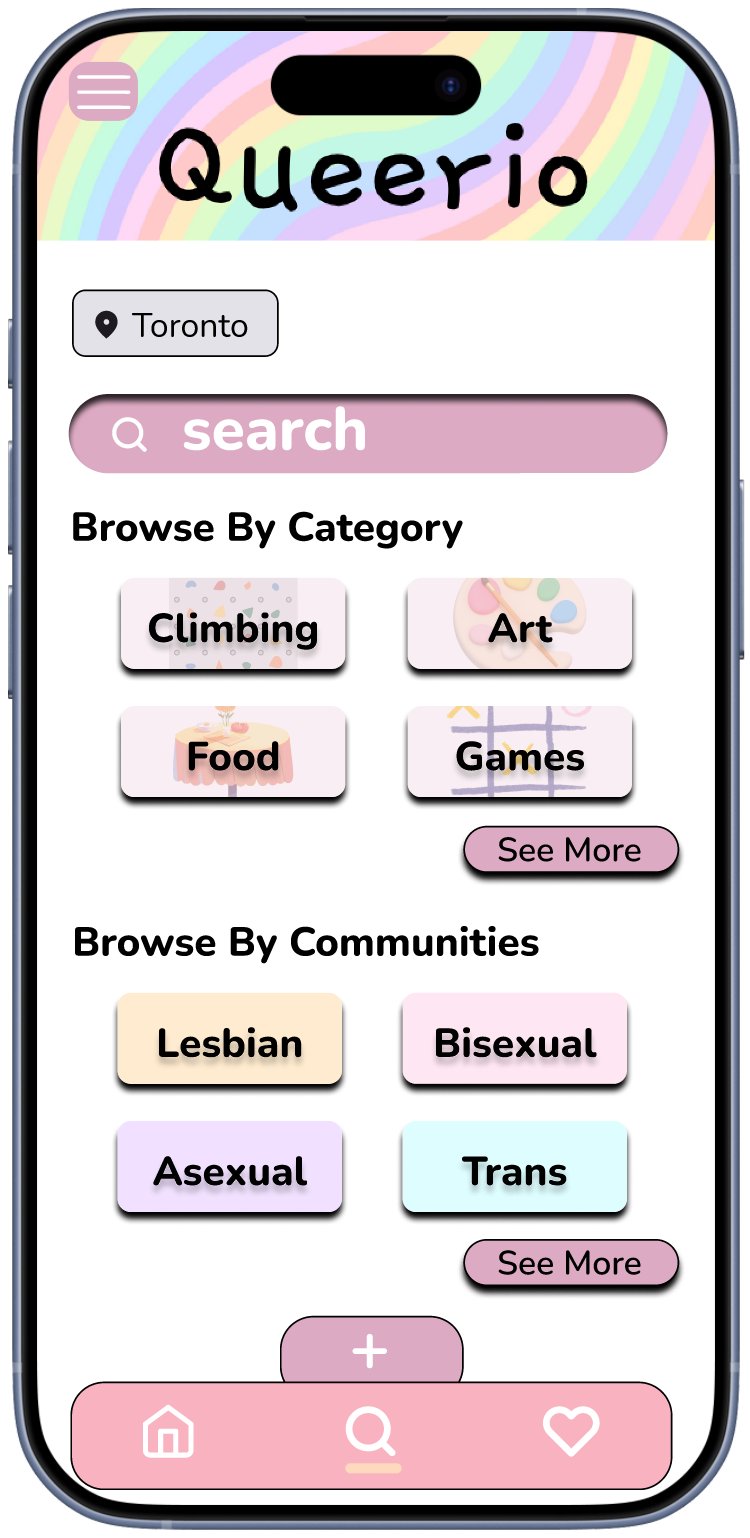
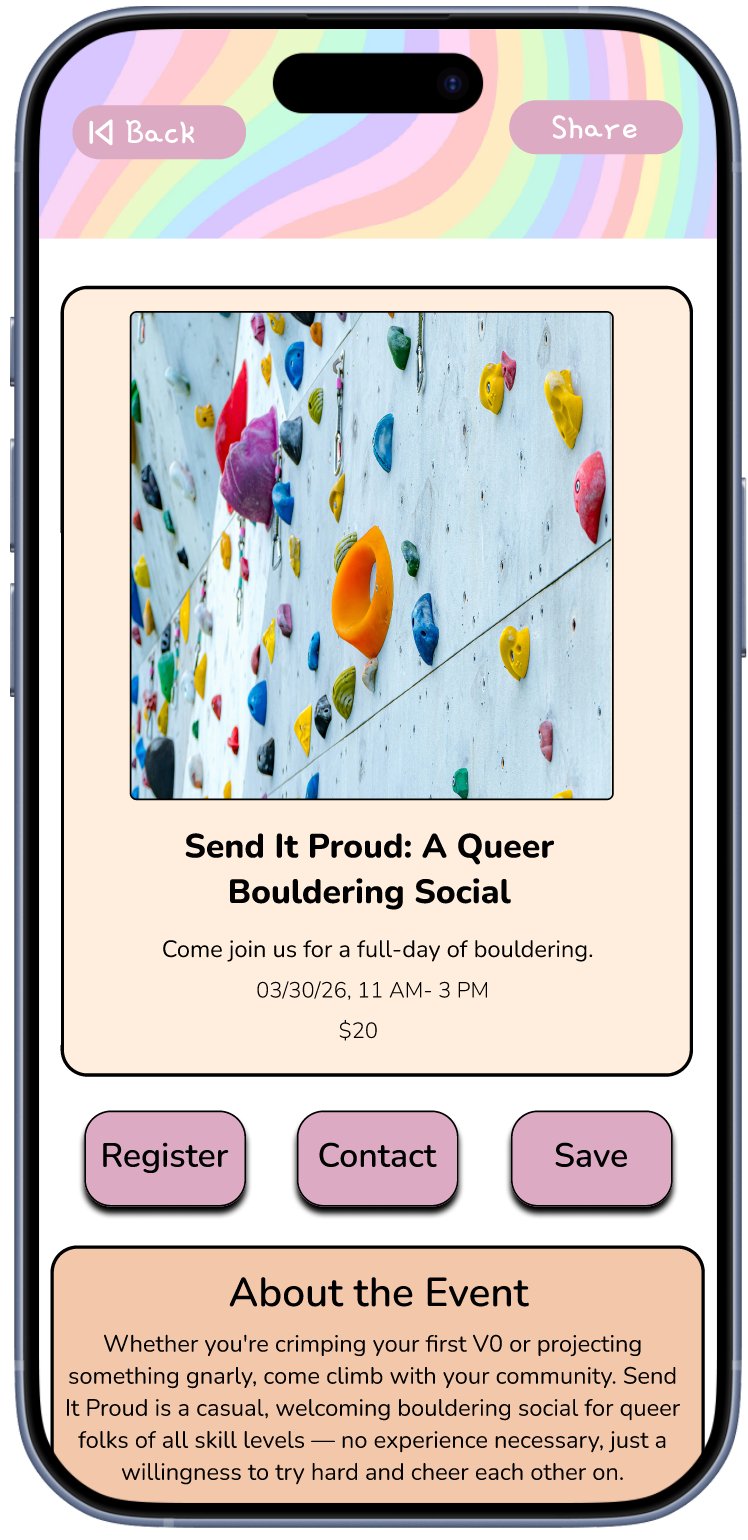
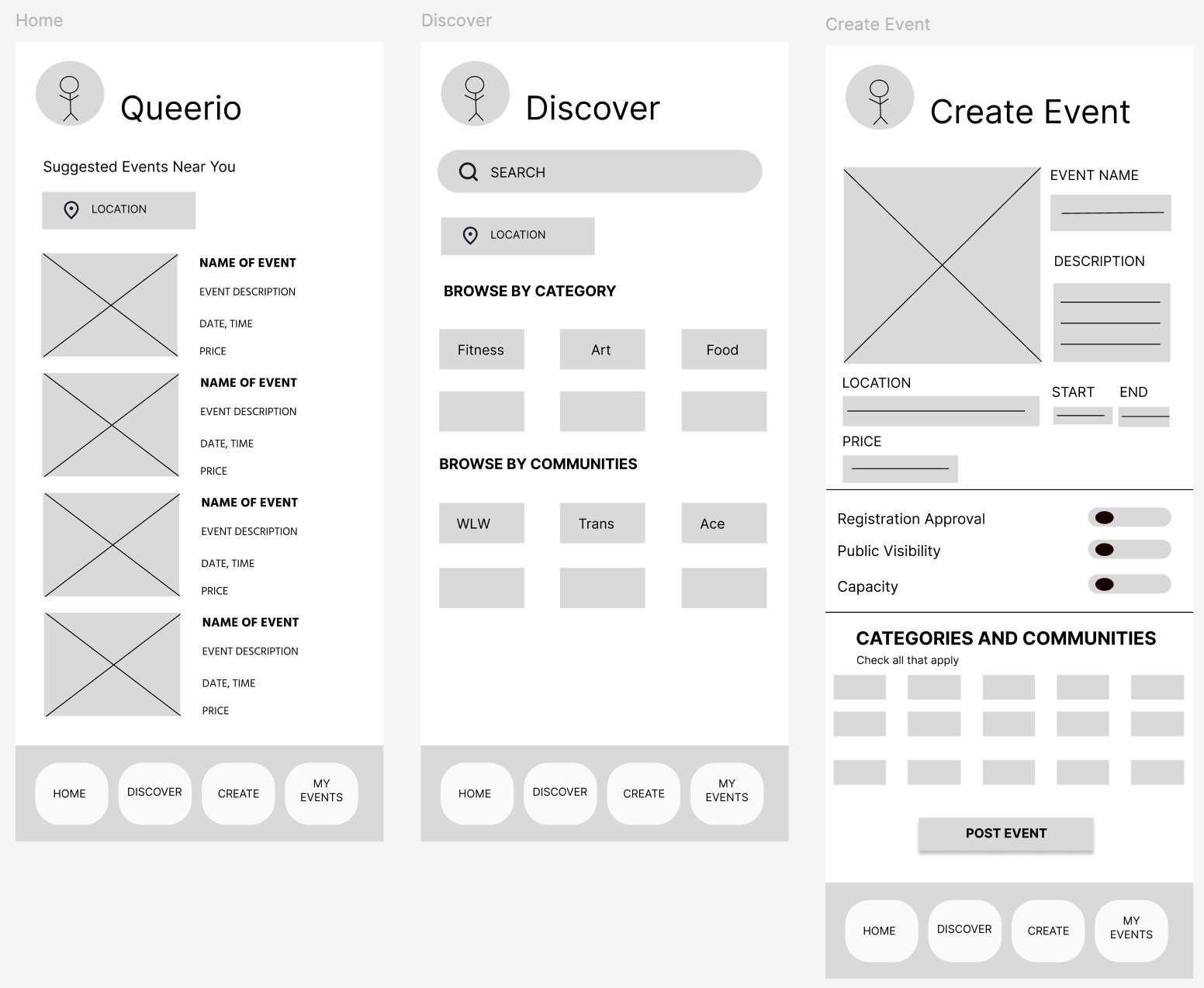
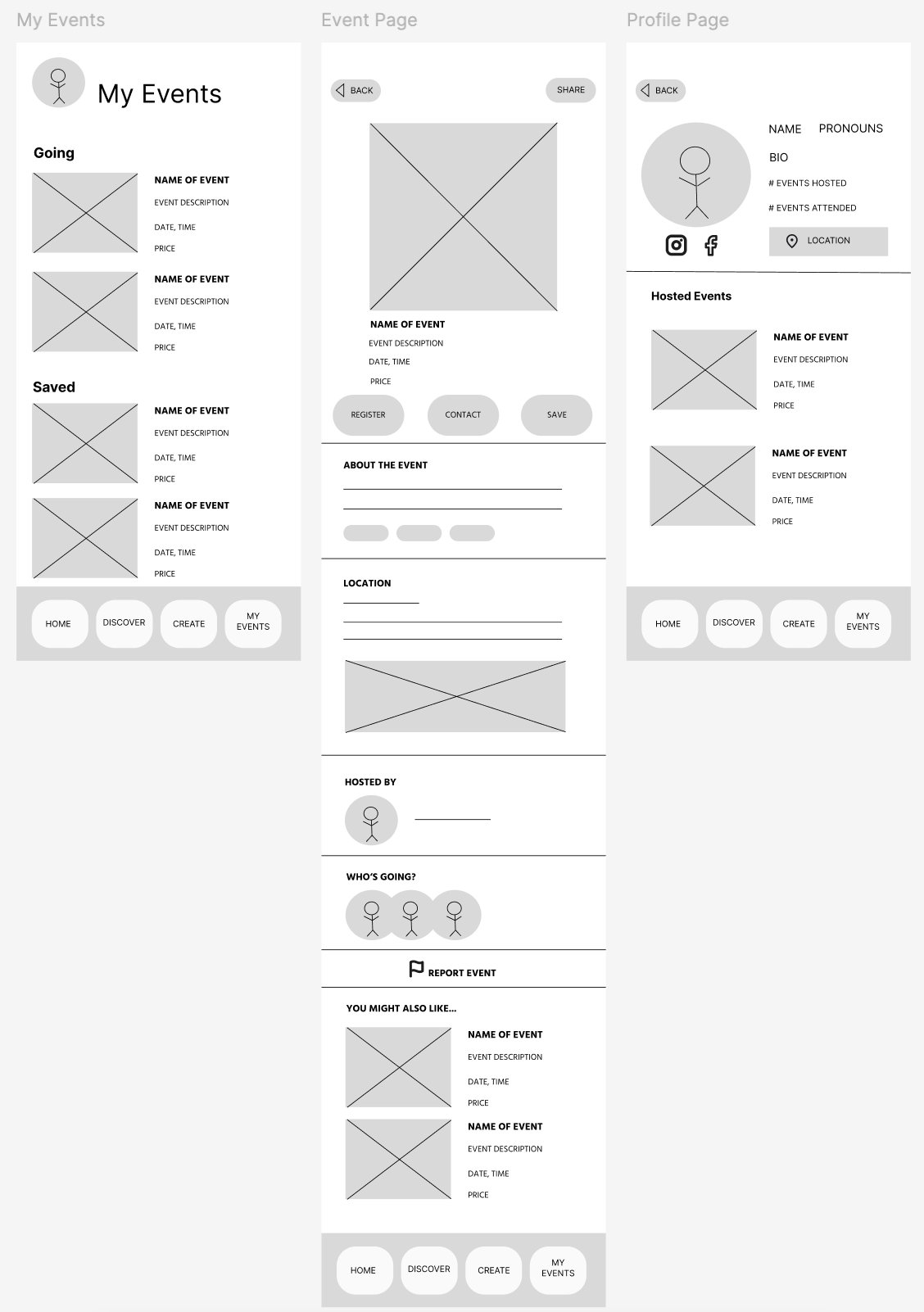
I started ideating by drawing out low-fi wireframes on paper. This was the initial draft of ideas for different screens in the app. After looking things over, I created the following set of low-fi wireframes in Figma.
Low-fi prototype user testing
With these low-fi wireframes, I created a prototype and invited Participant Y and Participant S to test out the design. I shared the link to the Figma prototype with them, and met them both online through Zoom. I chose to conduct a moderated usability study so I could be present if the participants had any questions and follow up with them on their thoughts and feelings in real time. However, to prevent having too much influence on their testing of the app, I only instructed them to click through the app as if they are searching for an event to attend in Toronto.
Feedback from usability testing
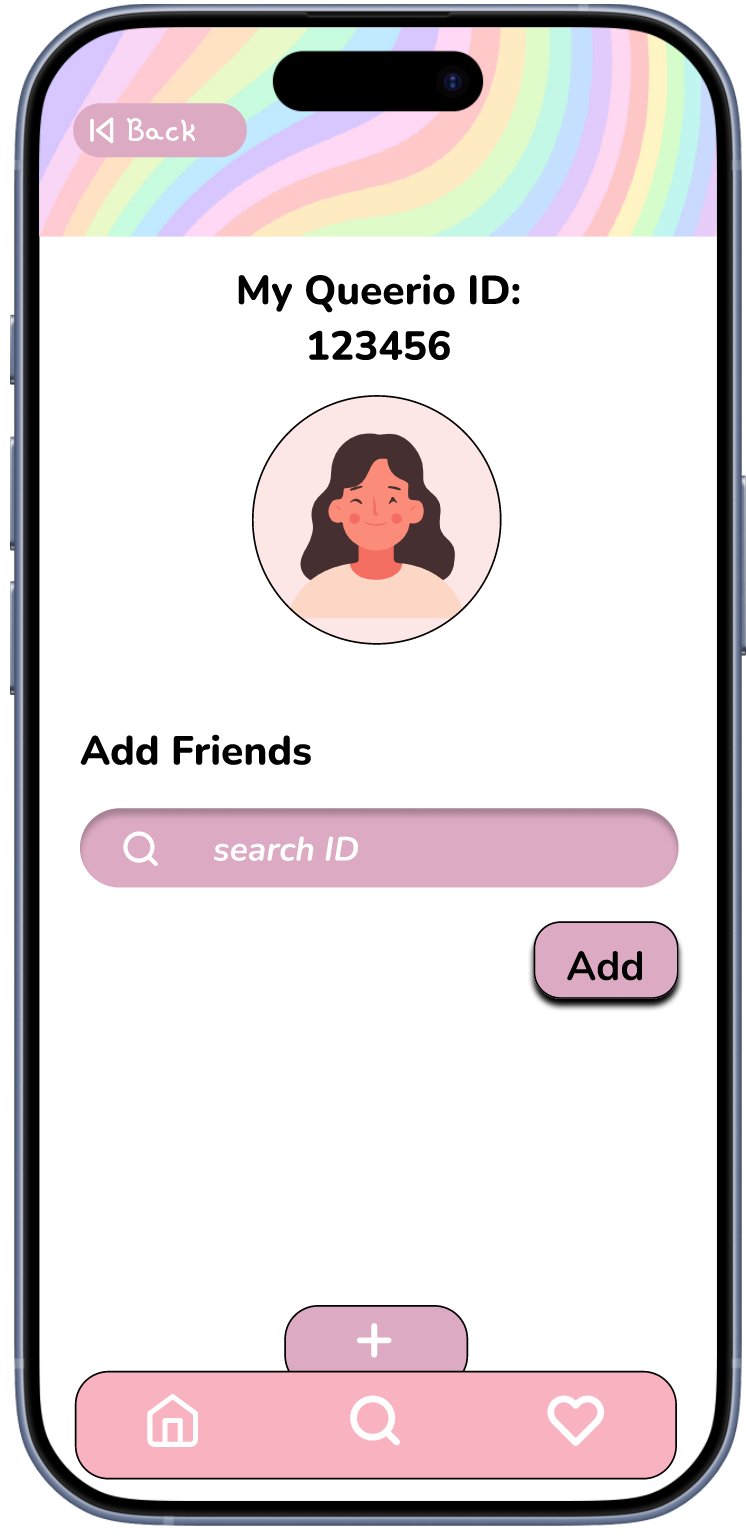
- Users wished they could add friends and see what events friends were going to. During my competitive analysis, I noticed some event apps do include the option to add friends and start chats with them. However, I was worried about safety concerns if I added this in. After hearing users’ feedback, I decided to add the option to add friends, without messages.
- Regarding the menu at the bottom: creating a new event feels like it should be differentiated from Home, Discover, and Your Events.
- Users didn’t like that the profile picture in the top left is on every page and clicking on it is how you get to your profile page.
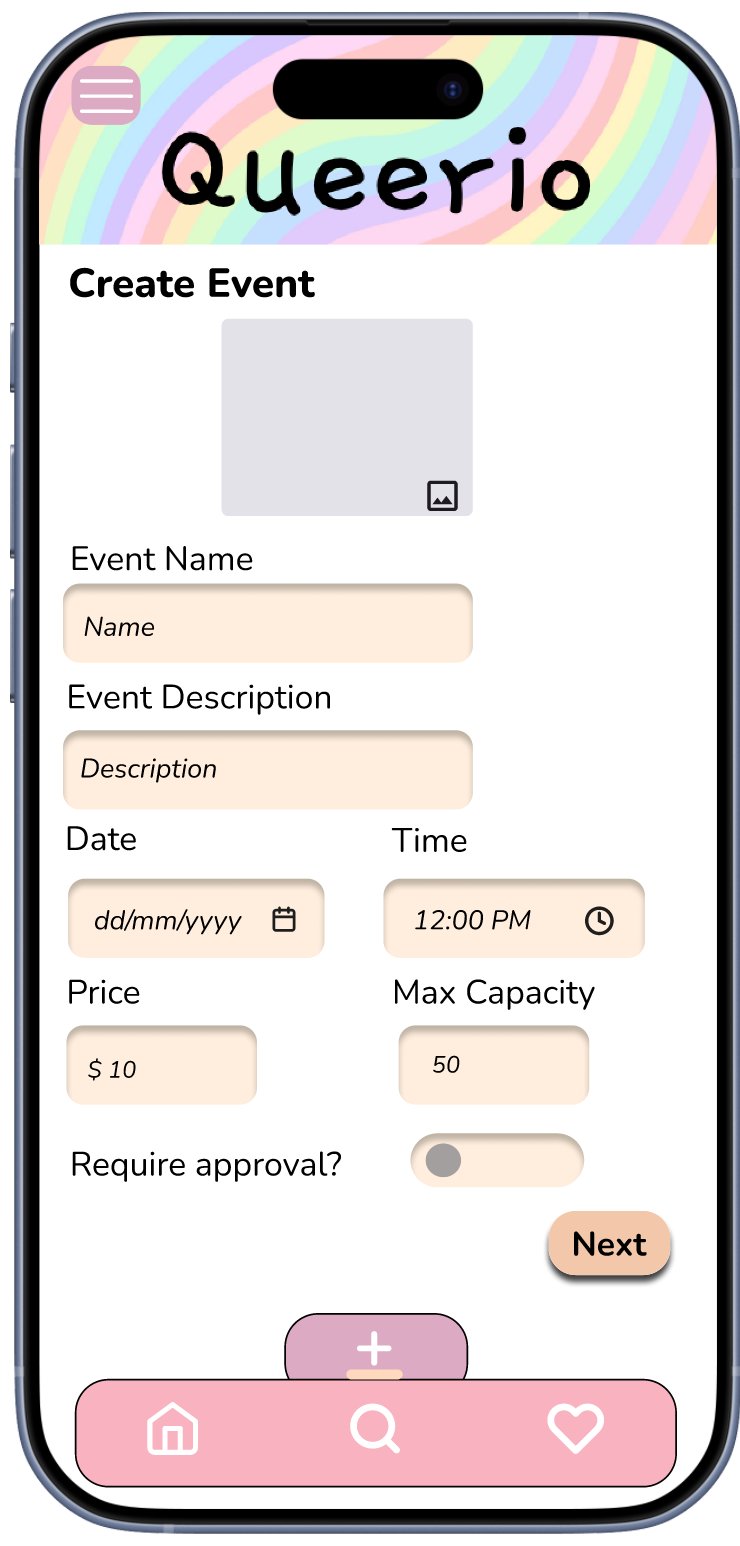
- The Create Event page feels crammed.
- Overall, user flow going from page to page makes sense and is intuitive.
High-fi design
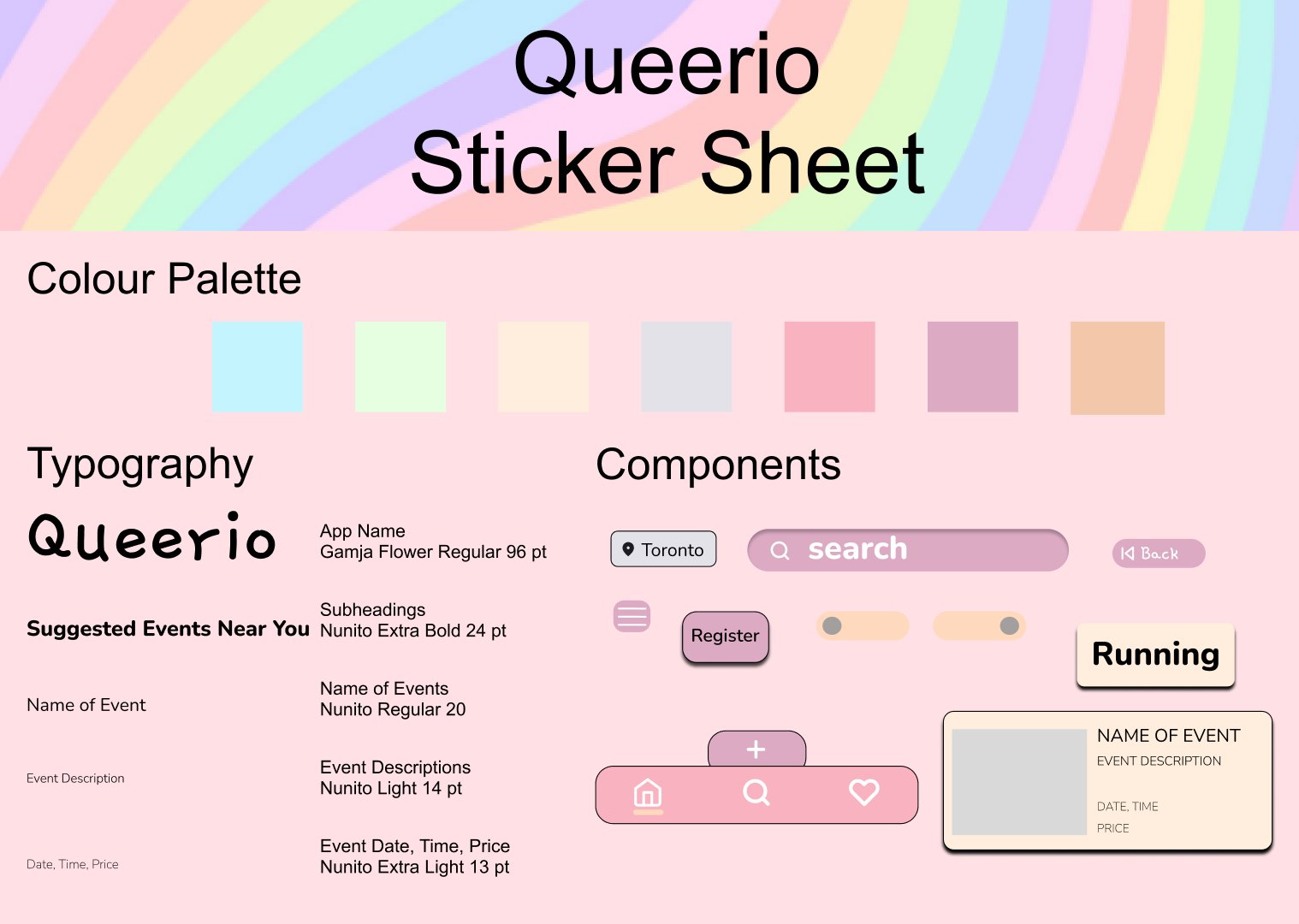
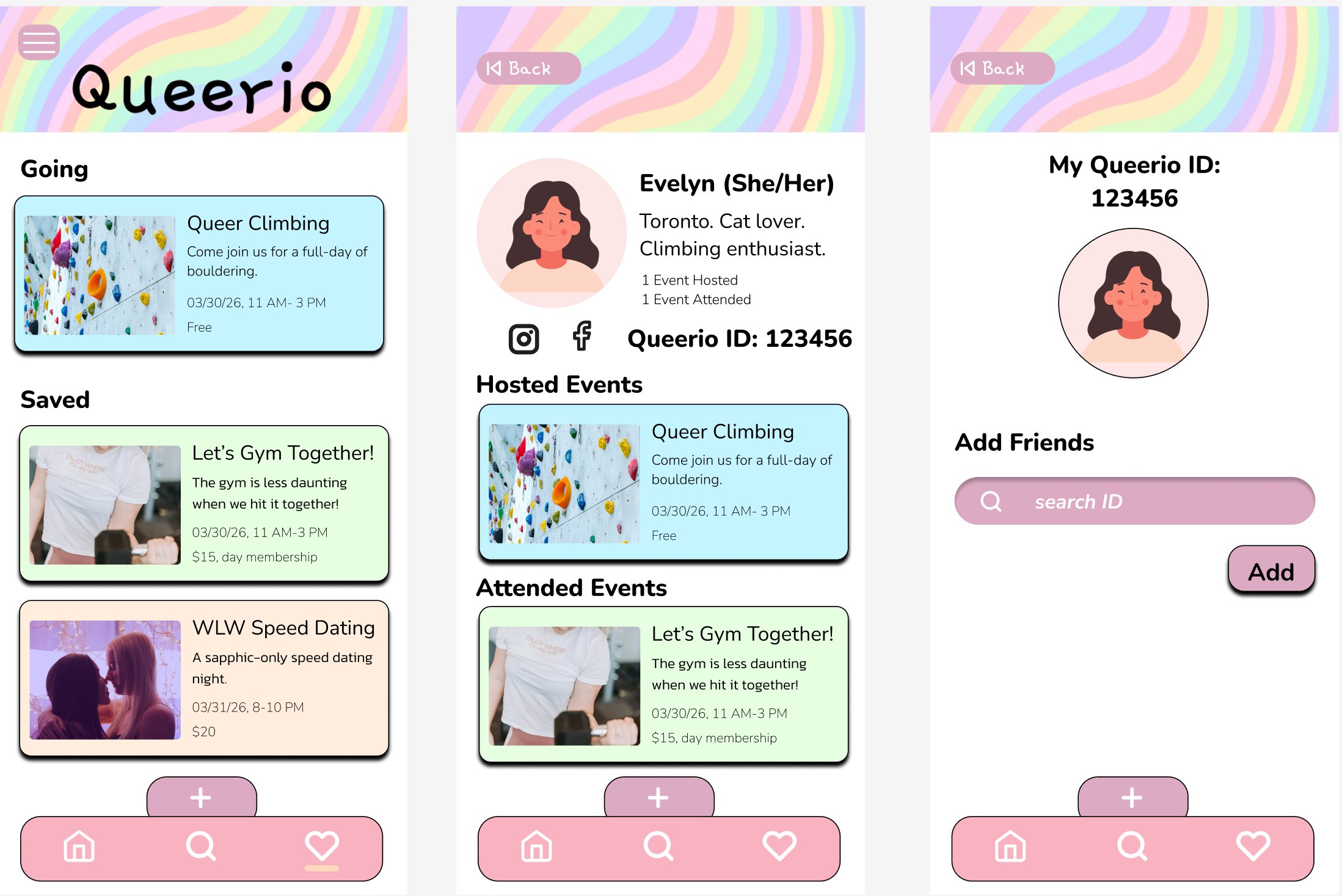
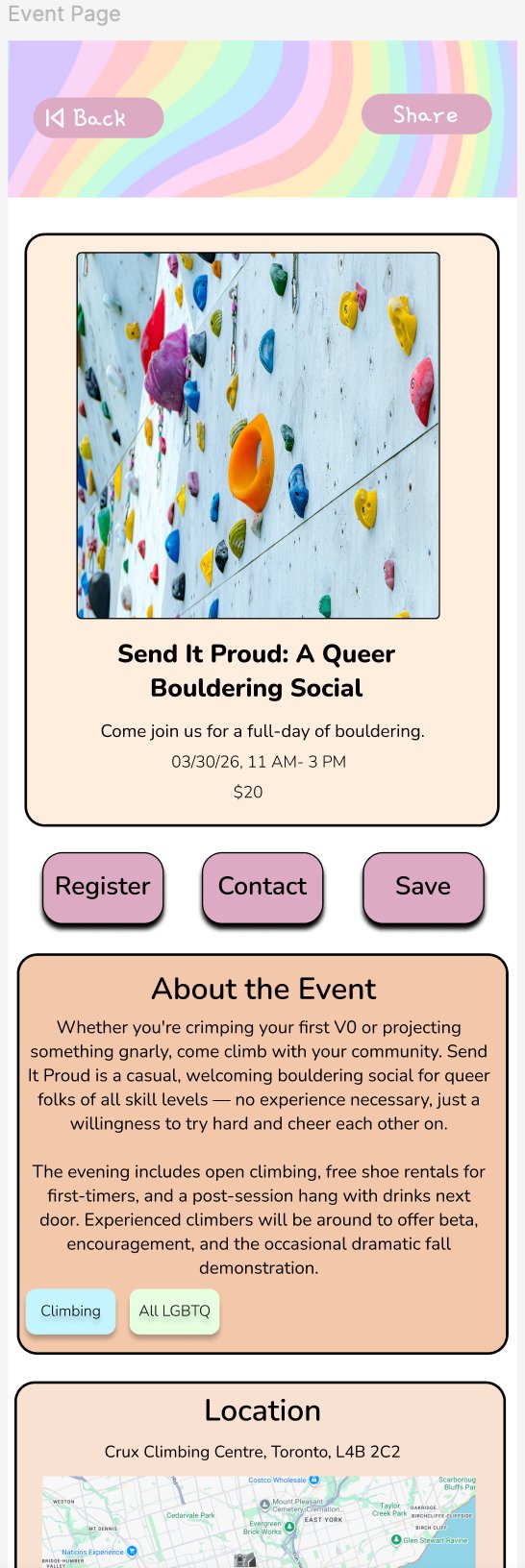
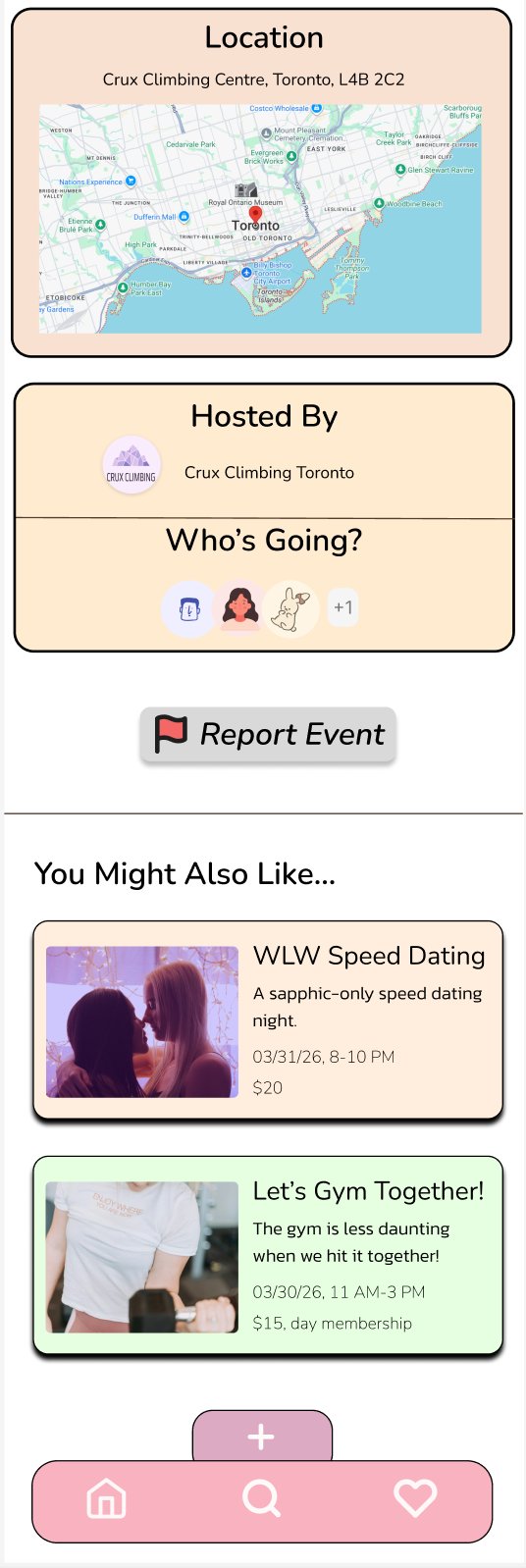
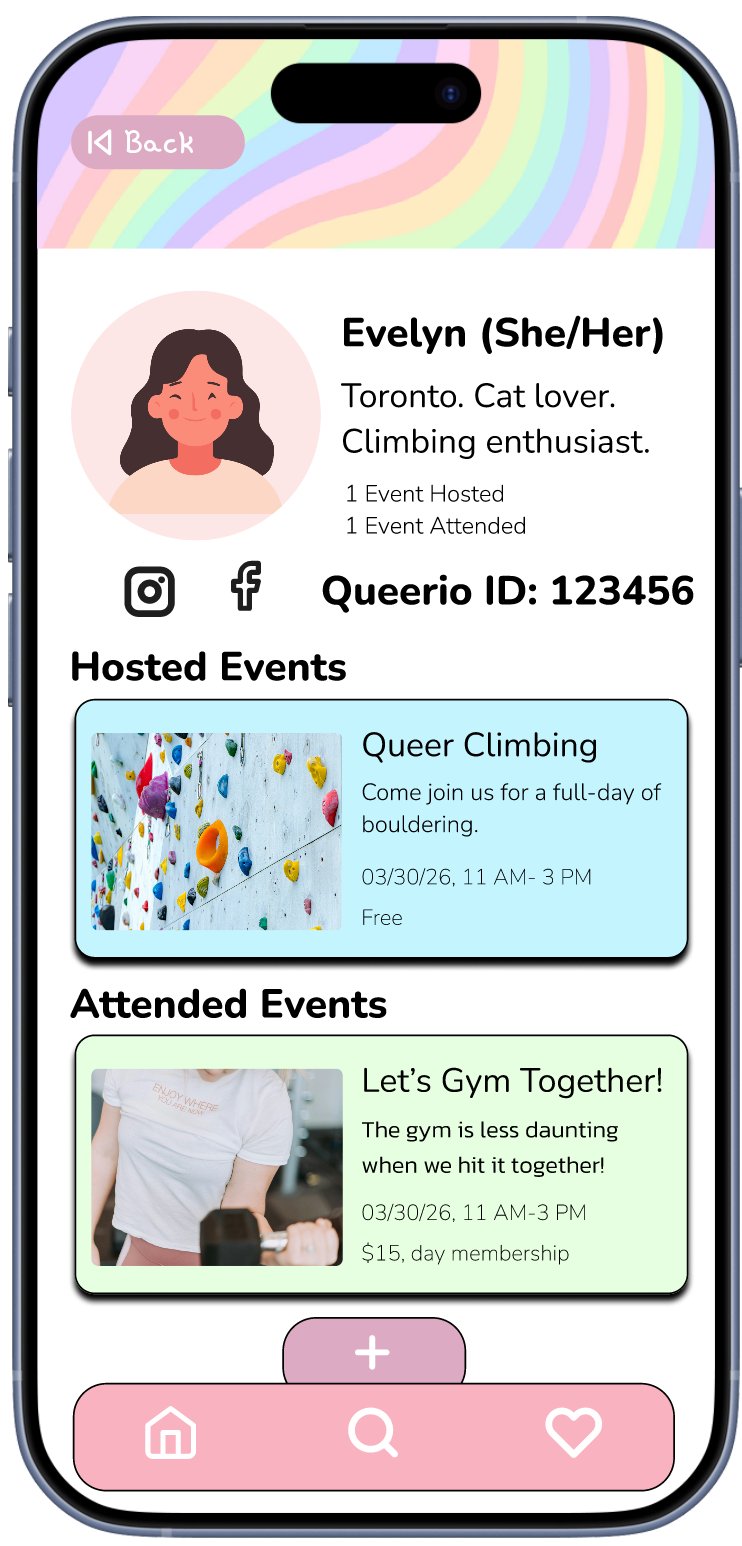
- Each Queerio profile has a Queerio ID. Users can add friends and search for their friends using this ID.
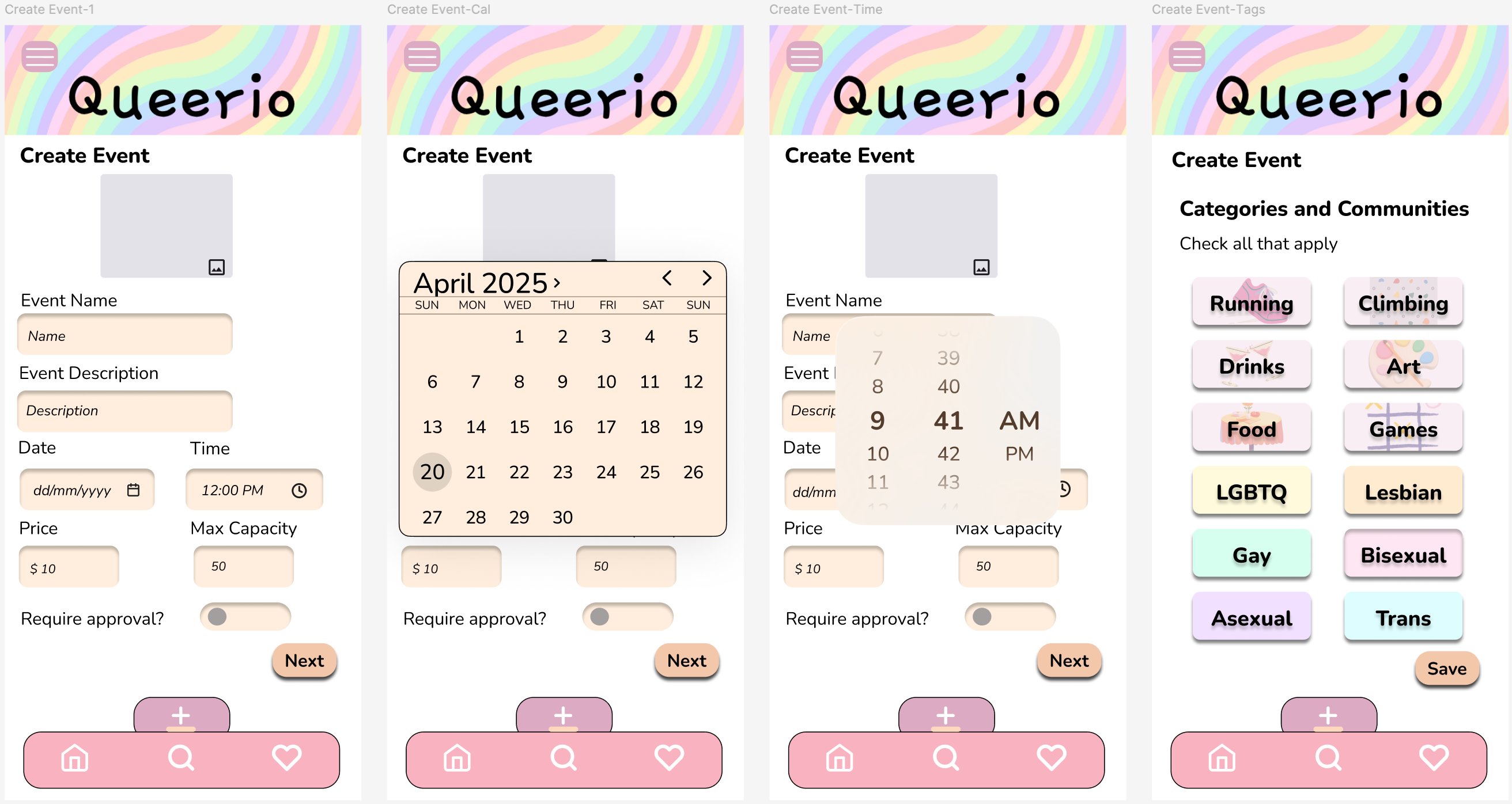
- The Create Event page is split up into multiple frames. Users choose their categories and communities tags on a second page. They also have the option to choose the date and time by either manually typing it in, or clicking on the calendar and clock icon to see a calendar and scrollable time picker.
- The position of the image and event details to fill in on the Create Event page has also been changed to space things out some more.
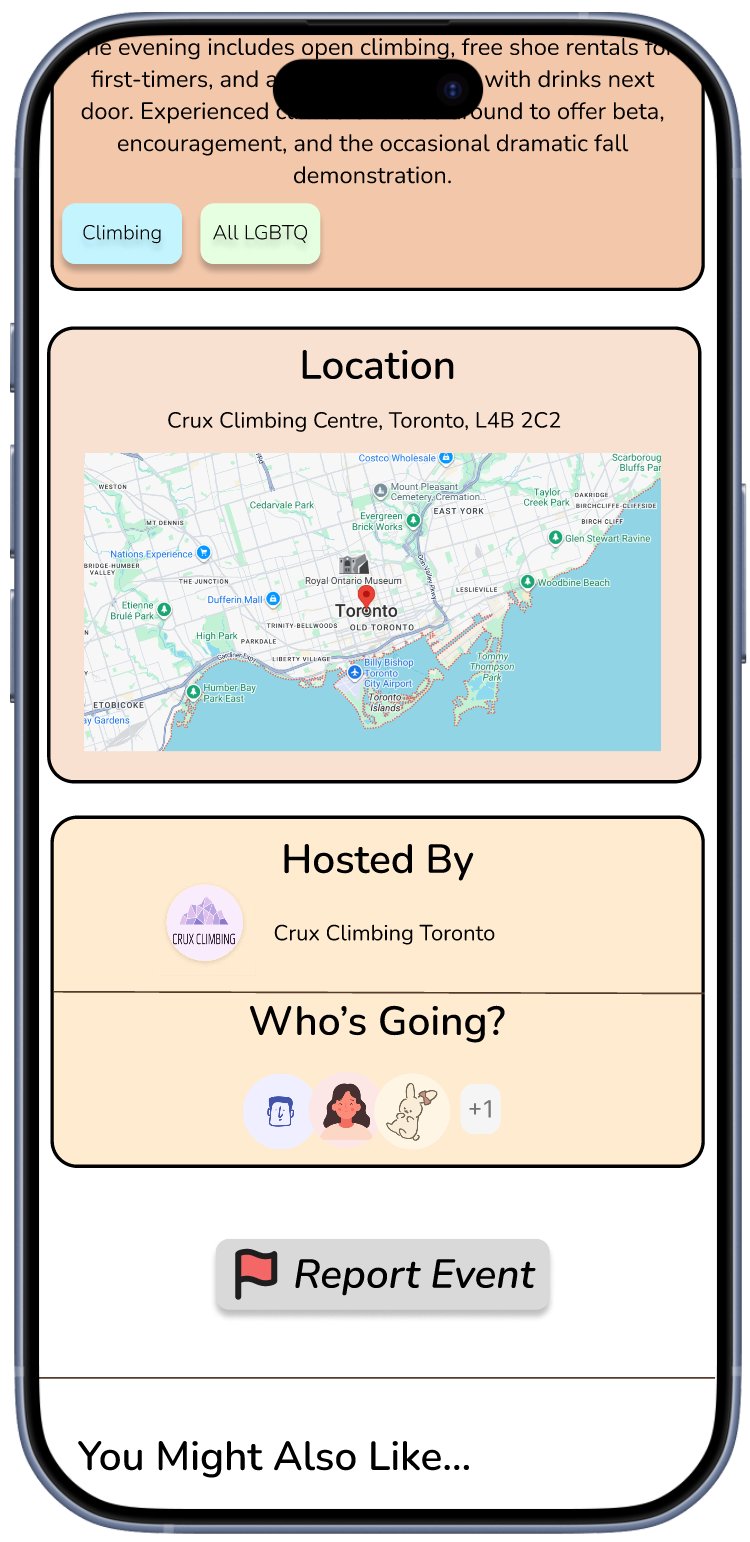
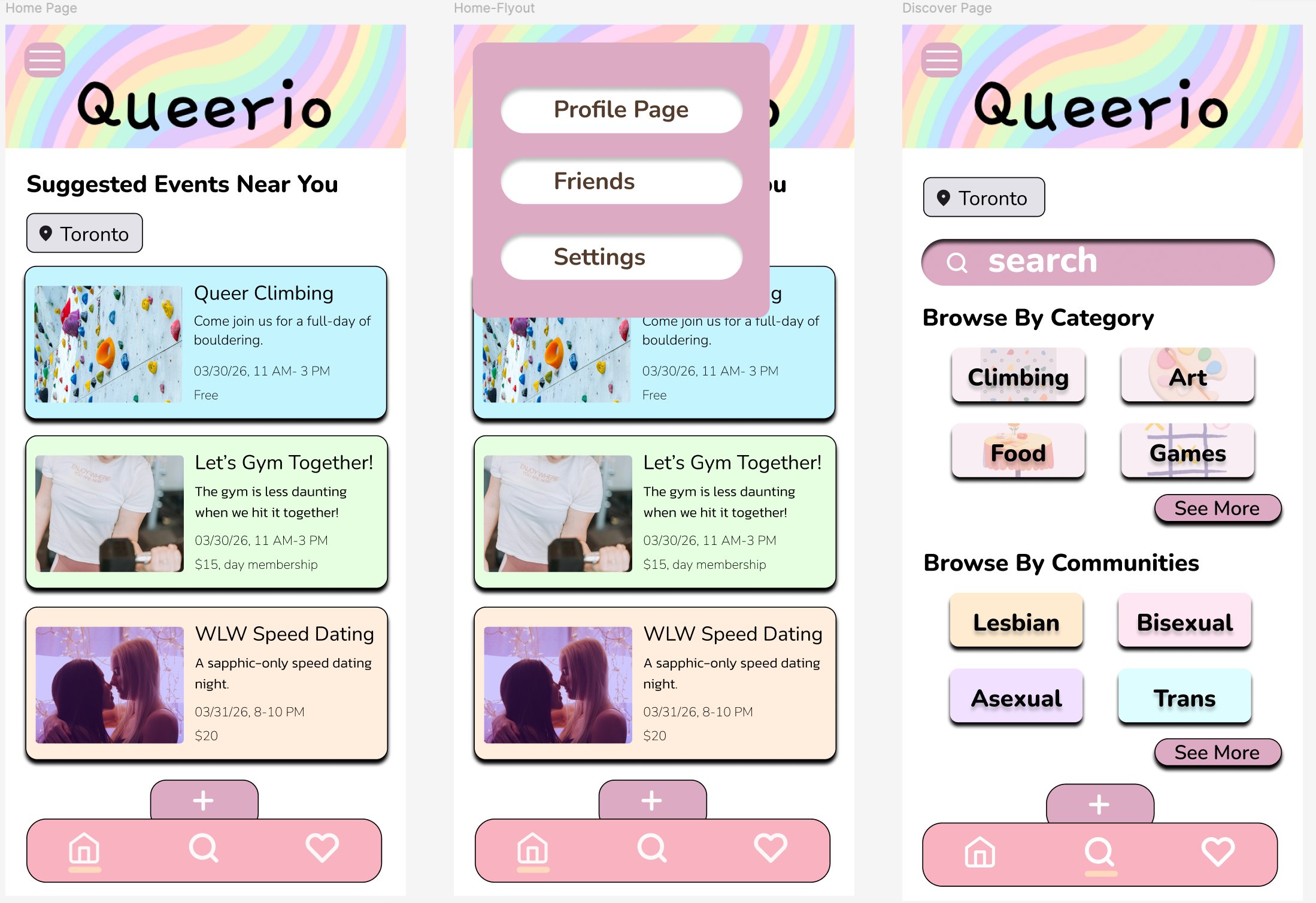
- There is a fly-out menu for users to access their profile page, friends list, and settings. The profile photo that was at the top left corner on every page was removed.
- The Create Event button in the bottom menu has been separated from Home, Discover, and My Events.